
What if the most significant drain on your 2026 logistics budget isn’t fuel or labour, but the very timber sitting beneath your stock? Many Australian business owners find that the rising costs of new timber products are eating into their margins, while confusion over weight capacities leads to avoidable safety risks. It’s frustrating to see broken wooden pallets cluttering your warehouse floor, especially when you’re trying to maintain a lean and efficient operation. You aren’t alone in wanting a more reliable, cost-effective way to handle your shipping and storage needs.
This guide is designed to help you navigate the Australian supply chain with confidence. You’ll discover how to select the right equipment, from standard 1-tonne units to heavy-duty 2-tonne racking pallets, ensuring your warehouse stays safe and compliant. We’ll show you how to optimise your shipping costs by choosing high-quality refurbished alternatives and how to implement a sustainable disposal plan for your unwanted timber. By the end of this guide, you’ll have a clear strategy to streamline your logistics and turn warehouse clutter into a functional asset.
Key Takeaways
- Understand why timber remains the industry standard for Australian unitised loads and how it supports long-term supply chain efficiency.
- Learn to accurately match cargo weight to 1-tonne or 2-tonne capacity wooden pallets to prevent equipment failure and ensure warehouse safety.
- Discover why professionally refurbished pallets offer the same structural integrity as new timber at a significantly lower price point for your business.
- Master a 4-step framework for managing your internal pallet pool to reduce warehouse clutter and maintain a streamlined environment.
- Explore the operational benefits of scheduled second-hand pallet collections to ethically dispose of unwanted timber and reclaim valuable floor space.
Understanding Wooden Pallets: The Backbone of Australian Logistics
In the fast-paced world of Australian transport, wooden pallets are the quiet workhorses that keep the economy moving. They serve as the essential platform for unitising loads, allowing businesses to bundle smaller items into a single, stable unit for transport. This standardisation is what makes modern warehousing possible. Without these sturdy timber structures, loading and unloading trucks would be a manual, time-consuming process that would significantly drive up operational costs.
While alternative materials like plastic exist, timber remains the preferred choice for most industrial applications across Australia. The reason is simple: timber offers a unique combination of strength, adaptability, and value. Unlike other materials that often require complete replacement if damaged, wooden pallets can be professionally repaired. This creates a sustainable lifecycle where a single pallet can support multiple shipments over several years, provided it receives regular maintenance from a specialist.
The core benefits of choosing timber include:
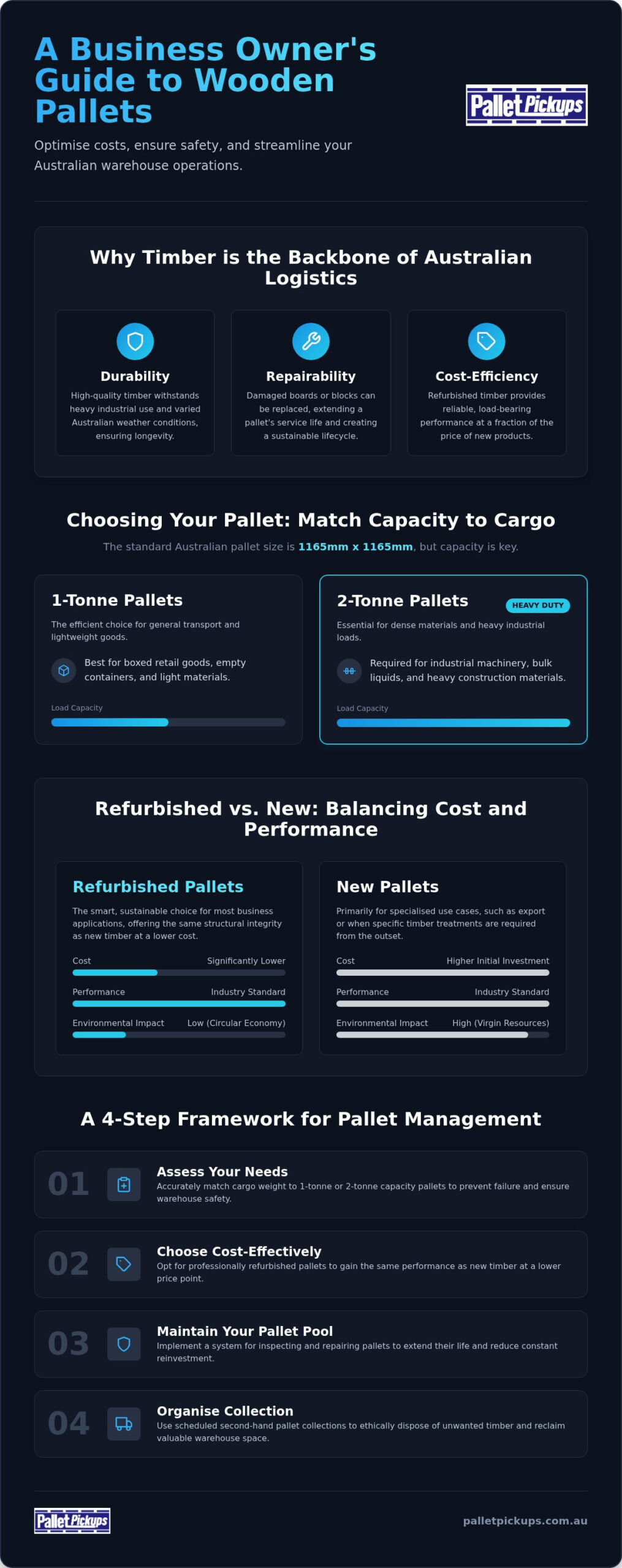
- Durability: High-quality timber can withstand the rigours of heavy industrial use and varied Australian weather conditions.
- Repairability: Damaged boards or blocks can be replaced, extending the pallet’s service life.
- Cost-Efficiency: Refurbished timber pallets provide a reliable solution at a fraction of the price of new products.
Why Timber Dominates the Shipping Industry
Safety in the warehouse often comes down to the physical properties of the materials you use. Timber has a natural surface friction that provides an excellent grip on forklift tines. This reduces the risk of loads shifting or sliding during high-intensity movements. Additionally, the modular nature of timber means that a 2nd hand pallet collection service can easily harvest components from broken units to fix others, ensuring that your fleet stays operational without constant reinvestment in new stock.
The Role of Wooden Pallets in Sustainable Supply Chains
Choosing refurbished timber is a practical way to lower your business’s environmental footprint. It’s far more energy-efficient to repair an existing pallet than it is to manufacture a new one from scratch. By 2026 standards, the circular economy of pallet refurbishment involves a continuous loop where used timber is inspected, restored to industrial safety levels, and reintroduced into the supply chain to minimise waste. This approach ensures that valuable resources stay in use for as long as possible, supporting a more resourceful and responsible logistics sector.
Comparing Standard Wooden Pallet Types and Specifications
Selecting the right equipment starts with understanding the technical requirements of your cargo. In the Australian market, most domestic freight relies on a specific footprint. Using the standard pallet size Australia (1165mm x 1165mm) ensures your loads fit perfectly into standard racking and transport vehicles. However, the external dimensions are only half the story. The real choice lies in the load capacity and the structural design of the wooden pallets you deploy.
Matching pallet strength to cargo weight is a critical safety step. Overloading a lightweight pallet doesn’t just damage the timber; it creates a significant hazard for your warehouse team. It’s essential to consider whether your pallets will be sitting on a flat floor or suspended in a racking system, as this changes how the weight is distributed across the timber boards.
1 Tonne vs 2 Tonne Pallets: Which Do You Need?
For businesses handling lightweight shipping, such as boxed retail goods or empty containers, 1 tonne pallets are often the most efficient choice. They provide enough structural integrity for general transport while remaining easy to handle and cost-effective for high-volume movements.
When your requirements involve dense materials, heavy-duty industrial machinery, or bulk liquids, you’ll need to upgrade to 2 tonne pallets. These units feature thicker lead boards and additional support to manage heavier static and dynamic loads without bowing or fracturing under pressure. Choosing the correct weight capacity prevents the structural failures that lead to stock damage.
Specialised Pallets for Racking and Export
Warehouse safety becomes even more complex when storing goods vertically. Standard units aren’t always designed for the specific stresses of a racking system. Using 2 tonne racking pallets is essential for high-rise storage because they are engineered to span the rack beams safely while fully loaded. This reduces the risk of the pallet slipping or breaking while suspended.
If your supply chain extends beyond Australian borders, you’ll likely require Euro pallets. These 1200mm x 800mm platforms are the standard across Europe and are often mandatory for international trade routes. Ensuring your export stock is on the correct footprint prevents costly repalletising fees at the destination port. If you’re unsure which capacity fits your current inventory, we can help you select the right pallet weight for your specific application.
Refurbished vs New Pallets: Balancing Cost and Performance
Many procurement managers assume that brand-new timber is the only way to guarantee safety. This is a common misconception. Professionally refurbished wooden pallets undergo a strict grading process before they ever return to the supply chain. Every unit is inspected for structural integrity; damaged components are replaced with sound timber to ensure they meet original load-bearing specifications. This rigorous approach means a second-hand unit can perform just as reliably as a new one on the warehouse floor.
Choosing refurbished stock isn’t just about saving money; it’s about reliability and resourcefulness. By opting for recycled timber, you’re tapping into a circular economy that prioritises industrial strength over cosmetic appearance. You can find more details on how these options compare in our guide on where to buy second hand pallets.
The Economic Case for Second-Hand Timber
The financial benefits of choosing second-hand are clear when you look at the price-per-unit for bulk orders. Refurbished pallets provide a dependable alternative to new manufacturing at a significantly lower cost. This allows you to reallocate your logistics budget to other critical areas while supporting local Australian recycling businesses. It’s a choice that makes sense for both your bottom line and the regional economy.
How to Inspect a Second-Hand Pallet for Safety
Reliability isn’t just about the age of the timber. It’s about the quality of the refurbishment. When you receive a delivery of wooden pallets, keep an eye out for several key indicators of professional care:
- Flush nails: Fasteners should be driven flat to prevent them from catching on stock or injuring staff.
- Sound lead boards: The outer boards take the most impact; they must be free from structural rot or deep fractures.
- Clean timber: Ensure the wood is free from significant chemical stains or oil contamination.
While minor surface scuffs are normal, you should never use pallets with significant cracks or missing blocks in high-rack storage. These defects compromise the weight-bearing capacity discussed earlier in this guide. If you want to ensure your warehouse fleet remains in top condition, you can book a professional pallet collection to clear out damaged or unreliable stock.
How to Organise Your Pallet Supply and Collection Strategy
Efficient logistics depends on viewing wooden pallets as reusable assets rather than disposable overheads. When you manage your pallet pool with precision, you reduce waste and ensure your team always has the right equipment ready for the next shipment. A disorganised warehouse floor isn’t just a productivity drain; it’s a safety risk that can lead to workplace injuries and stock damage.
To keep your operations running smoothly, we recommend a simple 4-step framework:
- Audit: Conduct weekly checks to identify damaged units and assess current stock levels.
- Segregate: Group pallets by weight capacity (1-tonne vs 2-tonne) to prevent loading errors.
- Stack: Store empty pallets squarely in designated zones, keeping stacks at a safe height to prevent toppling.
- Schedule: Arrange a routine 2nd hand pallet collection to remove broken or excess timber before it becomes a hazard.
Streamlining Warehouse Space with Pallet Removal
Identifying which pallets are beyond economical repair is vital for maintaining a lean warehouse. Look for units with shattered blocks or multiple fractured stringers, as these are no longer safe for industrial use. Regular removal is also essential for fire safety. In Australian warehouses, large piles of dry timber act as a significant fuel source; keeping your floor clear of unused pallets reduces this risk and ensures clear access for emergency services and forklifts.
Setting Up a Reliable Supply Chain
Consistency is the foundation of a dependable supply chain. When choosing a supplier, look for a partner that offers professional refurbishment and reliable delivery across the country. This ensures that every pallet you receive meets the safety standards your business requires. For many Australian SMEs, starting with a solid understanding of standard equipment is the best move. You can find more detail on this in our pillar article, 1 Tonne Pallets: The Essential Guide to Australian Standard Shipping. By pairing a reliable supply with a proactive collection strategy, you’ll turn your wooden pallets into a streamlined part of your business growth.
Future-Proofing Your Australian Supply Chain
Optimising your logistics for 2026 requires a focus on both safety and cost-efficiency. By accurately matching your cargo to the correct load capacity, whether that involves standard 1-tonne units or heavy-duty racking options, you protect your inventory and your workforce. Choosing refurbished wooden pallets is a smart way to maintain high industrial standards while significantly reducing your operational overheads. It’s about working with the resources you have and ensuring your warehouse remains a clear, productive environment.
We’re here to help you bridge the gap between sustainability and performance. Our team provides professional refurbishment and safety inspections to ensure every unit we supply is ready for the rigours of the road. Whether you need a reliable supply of weight-specific boards or an efficient national collection service to clear out unwanted timber, we have the expertise to support your goals. Organise your pallet collection or order refurbished stock from Pallet Pickups today. Taking these steps now will ensure your supply chain remains resilient and ready for whatever the year ahead brings.
Frequently Asked Questions
What is the standard size of wooden pallets in Australia?
The standard size for wooden pallets in Australia is 1165mm x 1165mm. This square footprint was originally developed to fit perfectly into Australian railway wagons, and it remains the primary standard for domestic transport and warehouse racking today. Sticking to this size ensures your loads are compatible with the vast majority of local logistics equipment and storage systems across the country.
How much weight can a standard wooden pallet hold?
A standard pallet’s capacity generally falls into two categories: 1-tonne or 2-tonne load ratings. It’s essential to distinguish between static weight, which is the load while the pallet is stationary on the floor, and dynamic weight, which applies when the load is in motion. You should always verify that your cargo weight doesn’t exceed the specific rating of the pallet to prevent structural failure or workplace accidents.
Are second-hand wooden pallets safe for high-rack warehouse storage?
Professionally refurbished pallets are entirely safe for high-rack storage as long as they’re rated for that specific use. Units like 2-tonne racking pallets are inspected to ensure every board and block meets the necessary structural integrity for suspended loads. You shouldn’t use unverified or “free” pallets found on the street for racking, as these haven’t been through the rigorous safety checks required for industrial storage.
How do I dispose of unwanted wooden pallets sustainably?
The best way to dispose of unwanted timber is through a scheduled collection service that focuses on recycling and refurbishment. This process keeps timber out of landfill by repairing usable pallets and returning them to the supply chain. If a pallet is beyond repair, the timber is often ground down for garden mulch or biofuel, ensuring that the natural resource is used responsibly until the end of its lifecycle.
What is the difference between a Euro pallet and an Australian standard pallet?
The main difference is the physical dimensions; an Australian standard pallet is 1165mm x 1165mm, while a Euro pallet is smaller at 1200mm x 800mm. Euro pallets are specifically designed for the European supply chain and are often a requirement for international export. If your business primarily moves stock within Australia, the standard local size is usually the most efficient and cost-effective choice for your warehouse racking.